


目次
Leather is used in many fashion items we wear daily, such as bags, shoes, and accessories. Leather is categorized into several types based on differences in raw materials and manufacturing processes, each with its own advantages and disadvantages. As consumers, let's learn about the issues surrounding leather to make better product choices while considering animal ethics and environmental problems.
What is leather?
Leather generally refers to animal hide processed with chemicals or other substances. Also known as "hikaku" (皮革), it is one of the durable materials used in various products. (Note: "Kawa" (皮) refers to the skin of a living animal, while "kawa" (革) refers to processed hide.)

The history of humanity and leather is ancient; approximately 20,000 years ago, people processed animal hides obtained through hunting into clothing for protection against the cold. The fact that Native Americans used leather ponchos as part of their traditional attire demonstrates the long history of leather processing.
In Japan, leather processing techniques are said to have been introduced from the continent by the Asuka period. Subsequently, during the Edo period, leather was used for flintlock ammunition pouches, and during the Meiji Restoration, it was used for leather shoes, replacing zori and geta. It is believed that leather became a widely popular fashion material among the general public during the post-war high economic growth period.
How is leather made?
The types of leather and processing methods are explained in detail in this article, but here we will briefly introduce the key points.
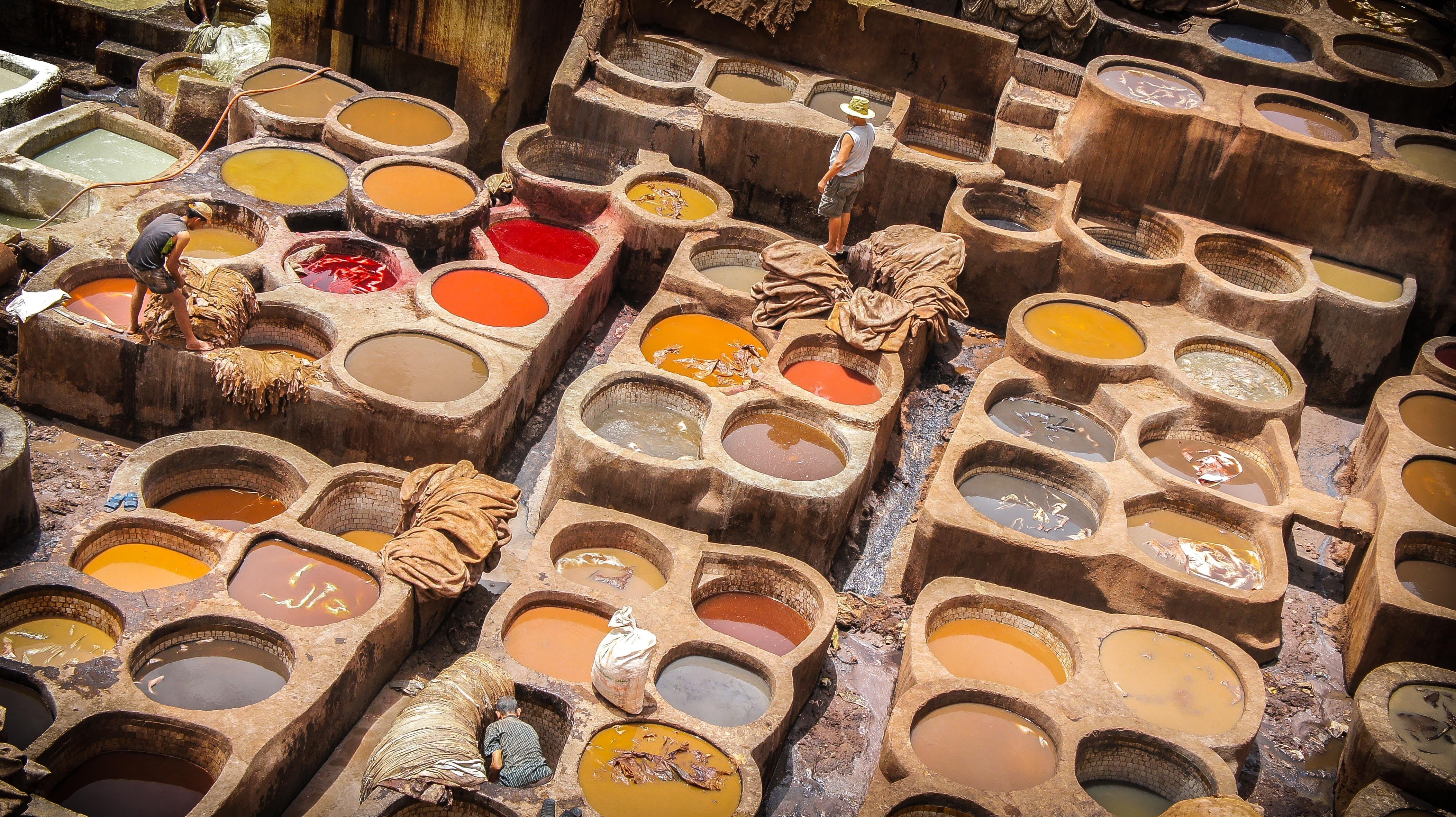
An indispensable step in leather processing is "tanning." Animal hides are originally animal skin and, if left unprocessed, are prone to decay and cannot be made into products. Therefore, hides are soaked in water and chemicals to remove dirt, and then colored and dried. Through this tanning process, leather as a material for product manufacturing is created.

Globally, "chrome tanning," which involves processing hides by soaking them in chemicals primarily composed of basic chromium sulfate, is common, accounting for 80% of all leather. The leather produced this way is called "chrome leather."
Current State of Japan's Leather Industry
According to the overview of domestic leather production compiled by the Japan Leather and Leather Goods Industries Federation based on the "Ministry of Economy, Trade and Industry Production Statistics" published by the Ministry of Economy, Trade and Industry, the production of chrome upper leather derived from cattle and pigs has been on a downward trend over the eight years from 2012 to 2020.
In fact, the same data shows that the production of chrome leather decreased from approximately 1 million sheets in January-June 2012 to approximately 740,000 sheets in the same period in 2016, and further to approximately 360,000 sheets in the same period in 2020. Furthermore, the trade value of leather also shows a similar decline to its production volume.
However, on the other hand, the total import value of "raw hides and leather" seems to be significantly increasing. The current situation is that inexpensive leather, mass-produced through environmentally harmful methods and under poor working conditions, is in circulation. Even if it is processed in domestic workshops, it is crucial to thoroughly verify the origin of the materials.
Challenges facing the leather industry
Although leather production in Japan has been continuously declining year by year, there are several underlying challenges.
Typically, leather manufacturing uses the hides of animals processed for meat. Therefore, if meat consumption increases, the supply of animal hides as raw material also inevitably increases. (Although Japan currently relies heavily on imports for most of this...)
Furthermore, in modern society where a large amount of meat is consumed, livestock is produced and shipped using methods called intensive livestock farming or industrial livestock farming, which aim to minimize costs while maximizing production.
As long as animals are produced for livestock, leather can be seen as a "by-product," but many people will feel a sense of discomfort using leather due to its environmental impact, such as carbon dioxide emissions, and animal ethics concerns.
Environmental challenges
Greenhouse gases are considered one of the direct causes of global warming. In fact, methane gas released from the burps of livestock such as cattle and sheep is said to be accelerating the rise in the Earth's average temperature. While there is a movement to reduce meat consumption as one measure to curb global warming, the livestock industry is growing remarkably due to population growth.
The leather industry is closely intertwined with the meat industry.
Leather is actually traded on the market as "raw hide" at variable prices, so consuming leather ultimately contributes to supporting the "livestock industry."
The number of consumers who are concerned that the livestock industry contributes to global warming will likely increase in the future.

In addition, chrome tanning, which is common in current leather processing, uses large amounts of water and chemicals, leading to concerns about its environmental impact and pollution from harmful substances.
On the other hand, it is also true that common vegan leather (synthetic leather), which is presented as an alternative to animal leather, has environmental drawbacks such as a shorter product lifespan and the use of petroleum-based resins as raw materials. Some argue that animal-based leather, which is said to last longer, might be more environmentally friendly, and the "correct" answer as to which is better for the environment might depend on one's perspective. However, isn't the livestock industry, the root cause of the problem, the biggest issue we need to continue to address?
Animal ethics
The younger the cowhide, the higher the price it fetches. There are various names for leather depending on the age of the cow whose hide is taken, and whether it is male or female, and each has different properties. The difference in the texture of the leather's surface creates a significant price difference.
Calfskin refers to the hide of a calf less than six months old.
From the perspective of the leather industry, it is the highest quality material among cowhides, used by world-renowned luxury brands, and traded at high prices. However, the question remains whether it is something we want to use to the extent of slaughtering healthy baby cows.

"Why is leather problematic?" Summary
Up to this point, we have organized and deepened our understanding of the current state of the leather industry from the perspective of "Why is leather problematic?" Moving forward, new changes will likely emerge in the leather industry, influenced by the future of the meat industry and our choices.
As consumers, it would be good to consciously choose products that we can use with affection, aligning with our lifestyle and beliefs.
[References]
・Japan Chemical Fibers Association
・JLIA Japan Leather and Leather Goods Industries Federation
[Related articles]
・ABOUT LEATHER|Japan Tanners' Association
・Artificial Leather and Synthetic Leather|Tokyo Laundry and Drycleaning Cooperative Association