


目次
In recent years, with the growing awareness of veganism and environmental issues, "vegan leather" has been gaining attention as an alternative material to animal-based leather. Plant-derived vegan leathers are continuously emerging, such as Apple Leather, made by upcycling discarded apple peels, and "Piñatex®," made from pineapple leaf fibers.
Among these, it is no exaggeration to say that mushroom-derived bio-leather "Mylo™" is currently attracting the most attention in the fashion industry. Last year, group companies that include Gucci and Saint Laurent, as well as Stella McCartney, announced investments of several million dollars to strengthen Mylo™'s production system. This time, we will introduce "Mylo™," a vegan leather supported by world-renowned brands.
What is Mylo?
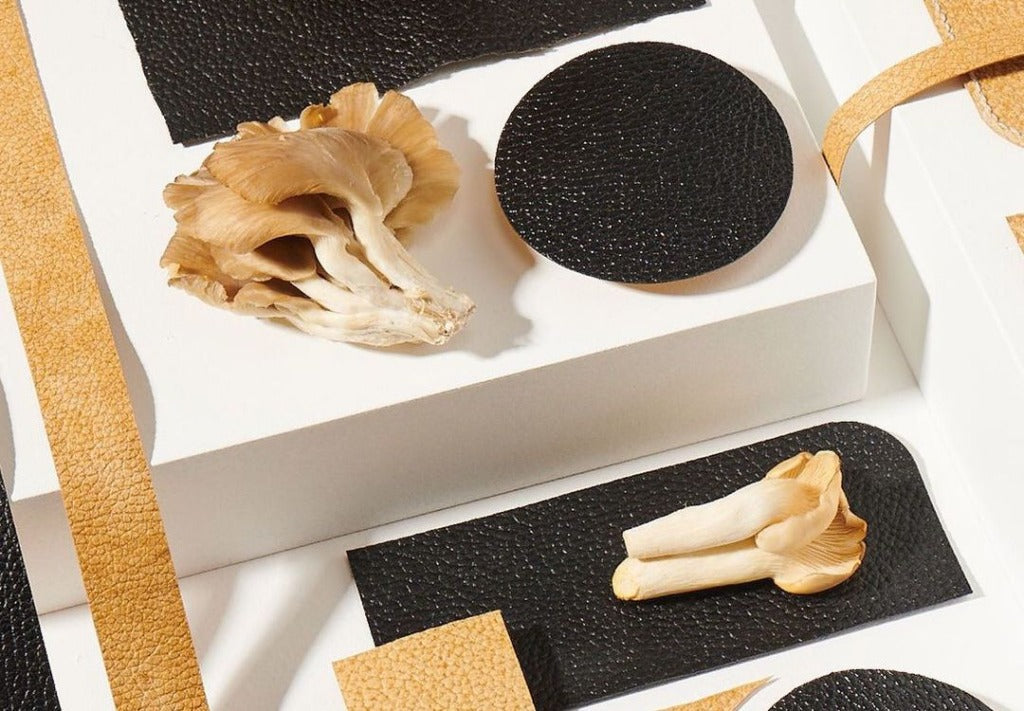
Mylo™ is a mushroom-derived vegan leather developed by Bolt Threads, a biotech venture company in Silicon Valley. Although it is made from mushrooms, it does not use the caps or stems that we typically eat. Instead, "Mylo™" is created by growing the infinitely renewable underground root system of fungi, known as mycelium.
Mylo™ is certified as a bio-based material under ISO standards*¹, eliminating the need for petroleum-based chemical fibers. For this reason, it is attracting attention in the fashion industry as an innovative material that minimizes environmental impact.
*¹ International standards that ensure products and services meet the same quality and level globally to facilitate international trade.
Background of Mylo Development
Bolt Threads, the company that developed Mylo™, was founded in 2009. In 2012, they developed a US version of "synthetic spider silk" from synthetic proteins, which was commercialized as "MYLOSILK" in 2017. Synthetic spider silk has excellent properties, being stronger than steel and finer than human hair.
Leveraging their expertise in developing synthetic spider silk, they developed the bio-based certified vegan leather "Mylo™" in 2018. Driven by the desire to create "not just a substitute for real leather, but something that even leather enthusiasts would approve of," they developed vegan leather with a quality that rivals animal-based leather in terms of texture and feel.
Furthermore, Bolt Threads commented on the development of Mylo™: "Our goal is to reduce environmental impact throughout the entire manufacturing process, considering every aspect of its lifecycle." True to their word, Mylo™ demonstrates thorough consideration for environmental issues, from the cultivation of the fungi used as raw material to the finishing and tanning processes. Let's delve into the intriguing production process.
Mylo Manufacturing Process
Mylo™ is produced indoors under controlled temperature and humidity conditions that closely mimic nature. The process begins with cultivating fungal cells, "mycelium," and sawdust on organic matter (corn stalks).
Over several days, the biodegrading mycelium forms strong cellular bonds, growing into a three-dimensional mat that resembles a bag full of crushed marshmallows. This is then compressed to form a thin fabric. Afterward, it undergoes tanning and dyeing processes, resulting in the completed vegan leather "Mylo™."
Furthermore, Mylo™ does not use harmful chemicals that significantly damage the environment or human health in its tanning process. While conventional tanning processes use harmful chemicals such as chromium, which can cause environmental pollution and health problems, Bolt Threads only partners with tanneries that have obtained international sustainability certifications.
Characteristics of Mylo
Mylo™ is characterized by its high-quality visual appeal, comparable to real leather, and its supple, flexible feel. It is also resistant to friction and other impacts, possessing excellent durability.
While the production of animal-based leather takes many years, Mylo™ can be produced in just 14 days. Its production process is designed to minimize environmental impact, allowing for resource-efficient and rapid manufacturing.
Mylo and Environmental Issues

"Mylo™" can be manufactured by providing organic matter as food for the mycelium to biodegrade. Compared to the production of real leather, which involves animal exploitation, this process can significantly reduce greenhouse gas emissions from animal agriculture and the use of natural resources such as water and land.
Furthermore, while "synthetic leather" such as synthetic leather and artificial leather uses petroleum-based chemical fibers like polyurethane and PVC, Mylo™ is made from natural fibers derived from mycelium, eliminating the need for chemical fibers. Petroleum-derived chemical fibers like polyurethane and PVC not only emit carbon during manufacturing but are also said to take hundreds of years to decompose in landfills after disposal. This has led to controversy over whether they are "truly environmentally friendly alternatives to real leather."
However, Mylo™ is a bio-based vegan leather, so it minimizes environmental impact after disposal. Additionally, materials used in Mylo™ production, such as sawdust and corn stalks, are composted and reused as fertilizer for subsequent manufacturing. This means that Mylo™ manufacturing can significantly reduce waste.
With no animal sacrifice, no need for petroleum resources, and minimal waste emissions, Mylo™ can be said to be a more sustainable material compared to any existing vegan leather.
Mylo Product Development
While Mylo™ may not yet be very familiar in Japan, leading fashion houses overseas are already moving towards commercializing products made from it.
After developing Mylo™ in 2018, Bolt Threads partnered with Stella McCartney, a brand known for not using any animal-based leather. Subsequently, Stella McCartney unveiled a prototype of her iconic "Falabella" bag using Mylo™. It was exhibited at the Victoria and Albert Museum in London, garnering significant attention.
In October 2020, Stella McCartney, Adidas, Kering (the parent company of Gucci and Saint Laurent), and Lululemon (yoga wear) formed a strategic partnership with Bolt Threads, the developer of Mylo™. As the first cross-industry initiative in the fashion industry, they invested millions of dollars to strengthen Mylo™'s production system.
Then, in 2021, exciting news emerged regarding the commercialization of Mylo™. Stella McCartney unveiled a "bustier top" and "wide trousers" made by layering Mylo™ over recycled nylon. While not yet available for general sale, the brand commented that it "plans to incorporate Mylo™ into future collections."
Additionally, Adidas announced plans to release sneakers made with Mylo™ in its 2022 spring/summer collection. Mylo was adopted for the "Stan Smith," known for its simple and classic design.
News of Mylo™ products being released by familiar brands in Japan has attracted attention not only from the fashion industry but also from vegan and environmentally conscious consumers. We look forward to seeing what Mylo™ products will emerge in the future.
Summary
Mylo™, a sustainable vegan leather created by cutting-edge biotechnology, combines quality comparable to animal-based leather with the ability to be produced in a short period with minimal resources. Considering these factors, it is poised to become an increasingly valued material in the fashion industry.