


目次
Cacti grow vigorously with little water if they have sunlight. Many people grow them at home because they are easy to care for. But did you know that cacti are attracting attention as a future material that can solve environmental problems, depending on how they are used? Genuine leather, a natural leather, has been criticized from the perspective of animal welfare, and also due to concerns about environmental pollution from tanning during manufacturing and the large amount of water used. In recent years, attention has been focused on plant-based vegan leather. This time, we would like to introduce cactus leather, one such vegan leather. We hope this article will help you learn a little about cactus leather.
What is cactus leather?
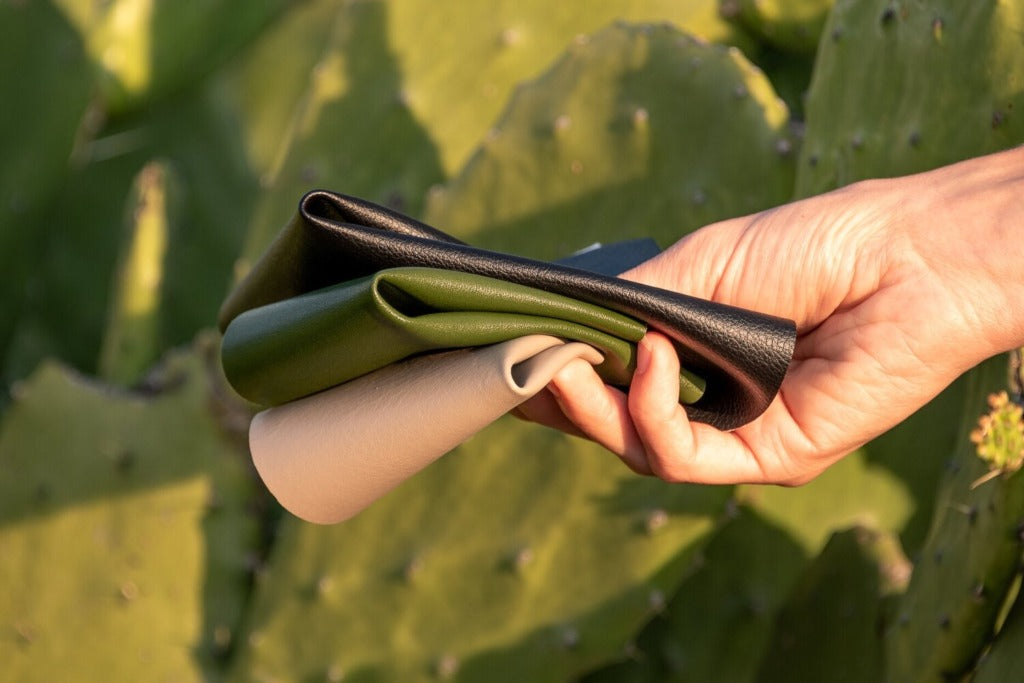
Cactus leather is, as the name suggests, a vegan leather made from cacti. It originated in Mexico, one of the countries with the most cacti in the world. Cactus leather is very soft to the touch and is suitable for various product developments, including fashion products, furniture, and even automotive parts. Furthermore, the resin on the surface of the leather does not contain harmful chemicals like phthalates or PVC (polyvinyl chloride), uses relatively little water, and synthesizes about 30% organic components with PU (urethane) resin. Therefore, it is attracting attention as an environmentally friendly bio-leather that can replace traditional leather.
How cactus leather is made
Cactus leather was developed by Mexican entrepreneurs Adrián and Marte.
The two originally worked in the furniture, automotive, and fashion industries, and through that experience, they deeply felt the problem of environmental pollution caused by these industries. With the desire to improve these environmental problems, the two founded a company and began developing cactus leather. After about two years of development, cactus leather was completed and named "Desserto." It launched in July 2019, received high praise at an exhibition held in Milan, Italy, the same year, and was recognized as the "world's first cactus vegan leather" at the Monte-Carlo Fashion Week held in Monaco in 2020, becoming a material that garnered significant global attention.

Manufacturing process of turning cacti into leather
How does a plant like a cactus transform into a material like leather? First, mature leaves of the prickly pear cactus, the raw material, are harvested and crushed by machine. Then, they are dried under the sun for three days until they reach the appropriate humidity level. The fact that no additional energy like ovens or gas is used in this process is also a positive point. After that, they are processed into a powder, treated with unique organic chemicals, and subjected to unique dyeing techniques to transform into leather.
Characteristics of cactus leather
One of the characteristics of cactus leather is its durability. The strong molecular bonds of the cactus components allow it to withstand friction and stretching.
It also boasts excellent flexibility and breathability, and a pleasant feel, so there's no need to worry about comfort. It's also resistant to moisture and UV rays, and easy to care for, which is a welcome bonus. Furthermore, advanced customization of color and thickness is possible, giving it an appearance comparable to genuine leather.
At a global leather fair held in 2019, cactus leather received high praise for its concept and texture. It is partially biodegradable, resulting in a small environmental footprint, and has also received organic product certification. Currently, some materials contain up to 61% natural components. Refer to the manufacturer's official website: https://desserto.com.mx/certified-biobased

Cactus leather and environmental problems
Cactus leather is attracting attention for its high contribution to environmental issues. While conventional genuine leather has been criticized for its carbon dioxide emissions during the manufacturing process, cactus leather can reduce carbon dioxide emissions by 80 percent. In addition, any remaining cactus from the production of cactus leather is sold as food, so no waste is generated during manufacturing. Therefore, cactus leather is said to be the material furthest from environmental pollution among vegan leathers.
Summary
We hope this has helped you learn a little about cactus leather. Leather made from cacti, which grow stably with only rainwater and soil minerals, can be considered a sustainable material. Also, leveraging its characteristic of lasting longer than other vegan leathers, it's one of those materials whose future product development we eagerly anticipate.