


目次
Currently, in the leather industry, real leather is said to be an environmentally detrimental material due to pollution from tanning and animal welfare concerns. Although petroleum-based artificial leather and synthetic leather have emerged as alternatives, their manufacturing processes also have an environmental impact, making them not the best option.
This is where plant-based vegan leather is gaining attention. This time, we would like to introduce one such material: Piñatex.
What is "Piñatex"?
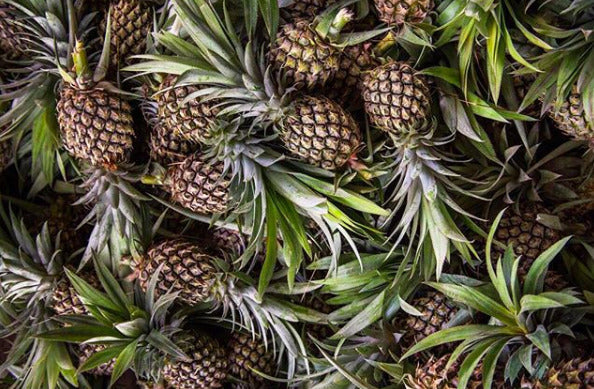
Piñatex® is an innovative natural material made from the fibers of pineapple leaves, a byproduct of pineapple farming. By effectively utilizing pineapple leaves that would otherwise be discarded, Piñatex has created a new income stream for pineapple farmers. This time, we will focus on Piñatex, a new natural and sustainable material.
The Genesis of "Piñatex"

In the 1990s, Carmen, a leather products expert, was consulting about the leather export industry in the Philippines. She was shocked by the massive environmental impact of large-scale leather production and chemical tanning, realizing it was unsustainable. However, she also knew that fake leather alternatives using PVC (polyvinyl chloride) were not an effective solution, so she began researching sustainable alternatives and discovered pineapple fibers. That was the beginning of "Piñatex."
The Manufacturing Process of "Piñatex"
"Piñatex" is made from the fibers of pineapple leaves. Since these leaves are normally discarded during pineapple harvesting, no additional environmental resources are required for raw material production.

The long fibers extracted from pineapple leaves are obtained through a process called decortication. Ananas Anam (the company that manufactures Piñatex) developed the first automatic decortication machine to support this process. This allows farmers to utilize large quantities of waste leaves. The fibers undergo an industrial process to become a non-woven fabric, transforming into the base of "Piñatex." Additionally, the biomass remaining after the fibers are removed from the leaves can be used as nutrient-rich natural fertilizer or biofuel, meaning there is no waste in the production of "Piñatex." It truly is an ideal sustainable business model.

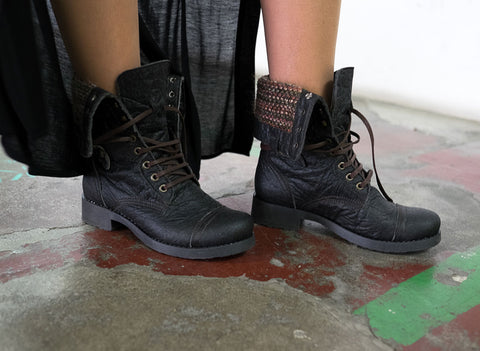
Rolls of non-woven fabric are then transported to Spain for specialized finishing. This unique manufacturing process gives Piñatex its leather-like appearance, creating a soft, flexible, yet extremely durable texture. The finished textile is distributed directly to designers. It is used as a sustainable alternative to leather in various applications such as footwear, fashion accessories, clothing, interior furnishings, and automotive upholstery.
The Social Impact of "Piñatex"

Ananas Anam supports rural communities by collaborating directly with agricultural cooperatives to create new income sources for pineapple farmers. "Piñatex," a new material made from pineapple leaves, a byproduct of the fruit industry, adds value to discarded leaves, creating new income streams for rural areas that were previously dependent on seasonal harvests.
Once the fibers are removed from the leaves, the remaining biomass is retained for use as natural fertilizer or biofuel, providing further economic value. While currently collaborating only with farmers in the Philippines, as the demand for "Piñatex" grows, there is an expectation to collaborate with other pineapple-producing countries, supporting local economies and strengthening exports.
The Environmental Impact of "Piñatex"

Natural leather (cowhide) has been used for thousands of years. However, as the industry demanded more and cheaper supplies, its production became environmentally unsustainable. Tanning involves about 250 chemicals in about 20 steps (including hexavalent chromium, aldehydes, cyanides, zinc, lead, and other heavy metals), which are highly harmful to both people and the environment.
Synthetic alternatives like PVC (polyvinyl chloride) are not effective solutions, as they are ecologically toxic in both production and disposal. Compared to these, "Piñatex" is made from natural waste, contains no harmful chemicals or animal products, and uses less water, making it a sustainable raw material.
Summary
Have you understood what kind of material Piñatex is and what its benefits are? When you hear about a material made from pineapples, it might sound like something made just for novelty.
However, it is actually an excellent material with many benefits: it effectively utilizes what would otherwise be discarded, residues from the manufacturing process can be used as fertilizer or fuel, it is biodegradable because it is natural, and it leads to ongoing support for farmers, making it kind to people, animals, and the environment.
Also, my personal impression after touching Piñatex was that it felt more like Japanese paper than leather.
This time, I introduced Piñatex as one option for vegan fashion, but it is also a very interesting material for those who are interested in fair trade and environmental issues.